Logistics Companies in Jacksonville, FL: Powering One of America’s Most Important Logistics Hubs
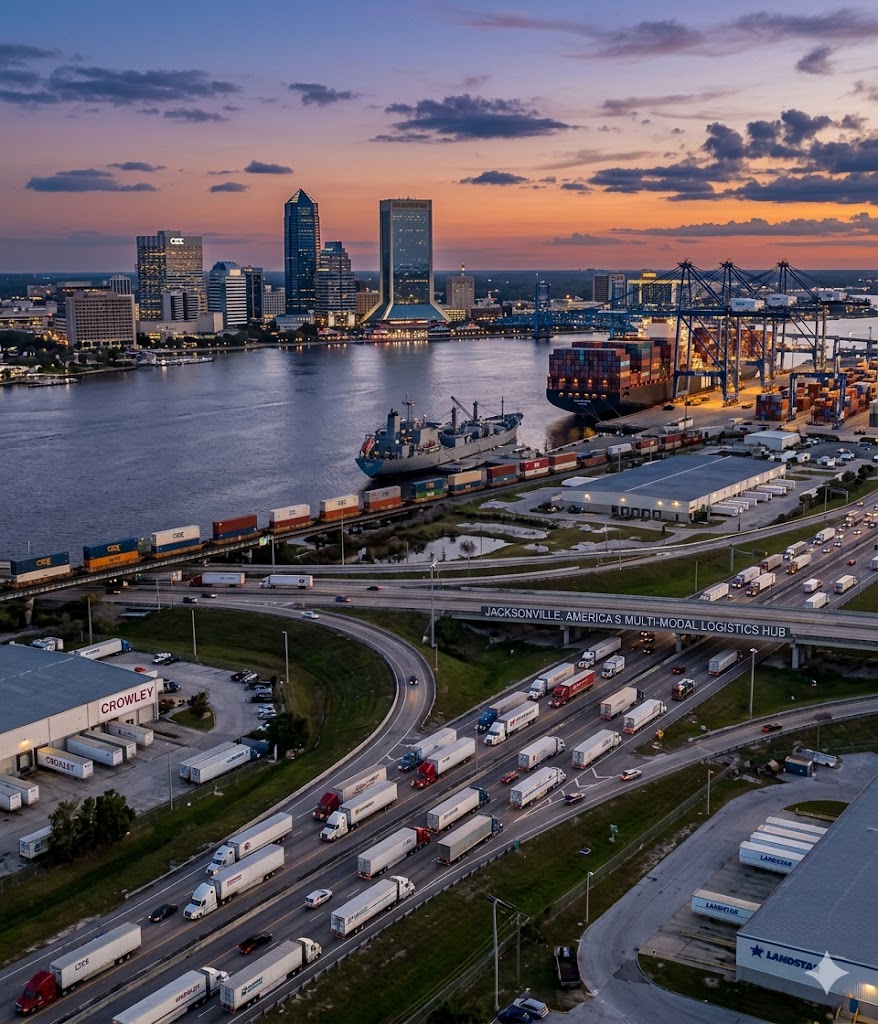
If you’ve driven across Jacksonville lately — past the JAXPORT terminals, along the I-95 and I-10 corridors, near Jacksonville International Airport, through the industrial districts on the city’s Westside, or out toward the Imeson area — you’ve witnessed something genuinely consequential.
Jacksonville isn’t just one of America’s largest cities by land area or one of Florida’s fastest-growing metropolitan economies. Jacksonville is one of the most strategically important logistics and supply chain hubs in the entire United States — and the companies anchoring that logistics economy collectively employ tens of thousands of professionals, generate billions in annual revenue, and move enormous volumes of goods, vehicles, materials, and freight that connect Florida to the broader American and international economies.
The Jacksonville logistics story is enormous and multidimensional. The city hosts one of the largest deepwater ports on the Atlantic Coast (JAXPORT). It anchors a major rail hub through CSX’s Jacksonville-headquartered operations. It supports massive trucking, freight forwarding, and distribution operations across multiple major corridors. It hosts substantial naval logistics through Naval Station Mayport and NAS Jacksonville. It increasingly anchors major e-commerce fulfillment and distribution operations. It serves as the southeastern logistics gateway for goods flowing between American consumers and the broader global economy.
Why Jacksonville Has Become One of America’s Most Important Logistics Hubs
Several structural factors have combined to make Jacksonville one of the most consequential logistics and supply chain hubs in the United States.
Strategic Geographic Position
Jacksonville sits at the intersection of multiple major American transportation corridors:
- I-95 running north-south along the entire East Coast
- I-10 running east-west across the southern United States from Jacksonville to Los Angeles
- I-75 accessible just to the west, providing additional north-south connectivity
- I-4 providing connection to Central Florida and Tampa Bay
- Major rail corridors including CSX’s primary southeastern infrastructure
- Atlantic Ocean access through one of the largest deepwater ports on the East Coast
- Major airport infrastructure including Jacksonville International Airport with substantial cargo operations
This combination of highway, rail, port, and airport access makes Jacksonville one of the few American metropolitan areas with genuinely comprehensive multi-modal transportation infrastructure.
JAXPORT and Maritime Infrastructure
The Jacksonville Port Authority (JAXPORT) operates one of the largest container ports on the East Coast, plus substantial automobile, breakbulk, and military cargo operations. JAXPORT serves as a primary port for:
- Vehicle imports with Jacksonville being one of the largest vehicle import ports in the United States
- Container shipping connecting to Asian, European, Latin American, and Caribbean markets
- Military cargo through substantial Department of Defense operations
- Breakbulk and project cargo for industrial and energy customers
- Cruise operations alongside cargo activities
CSX Headquarters and Rail Infrastructure
CSX Corporation — one of the largest freight railroad operators in the United States — is headquartered in Jacksonville, anchoring substantial rail logistics infrastructure across the southeastern United States and beyond. The CSX presence anchors not just rail operations but also extensive corporate, technology, and supporting infrastructure.
Trucking and Highway Logistics Concentration
Jacksonville hosts substantial trucking and highway logistics operations, with major trucking companies operating distribution centers, terminals, and corporate operations from the city. The combination of highway connectivity and Jacksonville’s central position relative to major Eastern markets makes the city a natural distribution hub.
Air Cargo Infrastructure
Jacksonville International Airport supports substantial air cargo operations, complementing the broader logistics infrastructure with air freight capabilities for time-sensitive shipments.
Industrial Real Estate Capacity
Jacksonville’s substantial industrial real estate inventory — supporting distribution centers, fulfillment operations, manufacturing, and logistics infrastructure — provides the operational foundation for the broader logistics industry concentration.
Workforce Availability
Jacksonville’s substantial workforce — including the city’s substantial military veteran population skilled in logistics operations — supports the labor needs of large-scale logistics operations.
Pro-Business Environment
Florida’s broader pro-business regulatory environment, combined with Jacksonville’s specific economic development focus on logistics and supply chain industries, has attracted continued logistics industry investment.
Continued Capital Investment
Major capital investment in JAXPORT, transportation infrastructure, industrial real estate, and broader logistics capabilities continues to compound Jacksonville’s structural advantages.
Major Customer Concentration
The substantial concentration of major customers — including automotive companies, retailers, manufacturers, and government entities requiring logistics services — supports continued logistics industry development.
Brian’s Take: Jacksonville’s Logistics Industry Is the Most Underappreciated Florida Economic Story.
While Miami’s financial industry migration and Tampa Bay’s broader business growth get most of the Florida business media attention, Jacksonville has quietly built one of the most consequential logistics and supply chain hubs in the United States — anchored by JAXPORT, CSX headquarters, major trucking operations, substantial air cargo, and the broader transportation infrastructure that connects Florida to the global economy. The companies operating from Jacksonville’s logistics ecosystem move enormous volumes of goods that affect virtually every American consumer, generate billions in regional economic activity, and employ tens of thousands of professionals across direct and indirect roles. Florida operators paying attention to the Jacksonville logistics story are recognizing one of the most strategically important industries shaping the state’s economic future.
— Brian
The Three Largest Logistics Companies in Jacksonville
While Jacksonville’s logistics ecosystem includes hundreds of companies across trucking, port operations, freight forwarding, distribution, warehousing, and supply chain services, three companies in particular illustrate the scale, sophistication, and global influence that defines Jacksonville’s emergence as a major logistics hub.
The three companies highlighted below represent some of the largest, most consequential, and most publicly significant logistics operations anchored in Jacksonville. Always consult primary sources for current information about any specific company’s operations.
1. CSX Corporation
Headquarters: 500 Water Street, Jacksonville, FL 32202 Stock Listing: NASDAQ: CSX Founded: 1980 (current corporate structure, with predecessor railroads dating to the 1830s) Industry Position: Class I freight railroad Approximate Employee Count: 20,000+ across the broader CSX system Website: csx.com
CSX Corporation is the largest single logistics company headquartered in Jacksonville and one of the most consequential transportation companies in the United States. As one of seven Class I freight railroads in North America, CSX operates approximately 20,000 route miles of track across 23 states, the District of Columbia, and Canadian provinces — connecting major American population centers, manufacturing regions, ports, and intermodal terminals across the eastern half of the United States.
CSX’s Jacksonville headquarters anchors not just the company’s executive operations but also substantial technology, finance, operations, and supporting infrastructure that has made Jacksonville a major Class I railroad headquarters city.
What CSX represents in Jacksonville’s logistics ecosystem:
- Major Class I railroad operations serving as one of the most consequential freight railroads in North America
- Jacksonville headquarters anchoring substantial corporate employment in the city
- Multi-state network providing logistics infrastructure connecting major American markets
- Diverse cargo capabilities including coal, intermodal containers, automotive, chemicals, agricultural products, metals, minerals, and forest products
- Strategic intermodal connections connecting rail with port operations, trucking, and broader supply chains
- Substantial publicly traded company status as a NASDAQ-listed major American corporation
- Continued capital investment in network infrastructure, technology, and operational capabilities
- Major Florida economic anchor generating substantial employment, tax revenue, and business activity
- Continued operational evolution through industry cycles and broader transportation industry change
CSX’s substantial Jacksonville headquarters presence has made the city one of the most consequential railroad industry headquarters cities in North America, supporting not just the company’s direct operations but a broader ecosystem of railroad-related professional services, technology providers, and supporting industries.
For Jacksonville specifically, CSX’s headquarters represents one of the most significant single corporate anchors in the city’s economy — generating substantial tax revenue, supporting downtown Jacksonville’s continued vitality, and contributing to the city’s broader corporate identity beyond its logistics-specific economic contribution.
The company’s continued operational evolution — including major capital investments, network optimization initiatives, and ongoing engagement with broader transportation industry dynamics — keeps CSX at the center of conversations about the future of American freight rail and the broader logistics industry.
2. Crowley Maritime Corporation
Headquarters: Jacksonville, Florida (corporate operations) Founded: 1892 (originally in San Francisco, headquarters relocated to Jacksonville in 2017) Industry Position: American-owned global maritime, energy, logistics, and supply chain services Approximate Employee Count: Several thousand across global operations Website: crowley.com
Crowley Maritime Corporation is one of the largest and most distinguished American-owned maritime, logistics, energy, and supply chain services companies in the United States. With more than 130 years of operating history (founded in 1892), Crowley has grown into a diversified global operator with extensive operations across maritime shipping, logistics, fuel and energy services, ship management, and broader supply chain capabilities.
Crowley’s relocation of its corporate headquarters to Jacksonville from California in 2017 represented a major commitment to the city and reflected Jacksonville’s growing significance as a maritime and logistics center.
What Crowley represents in Jacksonville’s logistics ecosystem:
- Major American-owned maritime company with global operations spanning shipping, logistics, energy, and supply chain services
- Jacksonville corporate headquarters anchoring substantial executive and operational employment in the city
- Maritime shipping operations including container shipping, breakbulk, and specialty cargo across multiple geographies
- Caribbean and Latin American specialization with substantial operations connecting United States markets to the Caribbean and Latin American economies
- Energy and fuel services including petroleum transportation and energy supply chain capabilities
- Logistics and freight forwarding services across multiple geographies and cargo categories
- Government and military services including substantial Department of Defense logistics support
- Wind energy services as Crowley has expanded into offshore wind support services
- Continued strategic evolution as the company adapts to changing maritime and logistics industry dynamics
Crowley’s substantial Jacksonville presence anchors important parts of the broader Jacksonville maritime and logistics ecosystem, complementing CSX’s rail operations, JAXPORT’s port operations, and the broader logistics industry concentration.
The company’s distinctive position as a privately held American-owned maritime company — increasingly rare in an industry dominated by international shipping conglomerates — gives Crowley a particular strategic position serving American customers and government clients with American-flagged operations.
For Jacksonville’s broader maritime and logistics identity, Crowley’s headquarters relocation in 2017 was a major symbolic and operational achievement, reflecting the city’s growing position as a serious maritime and logistics center capable of attracting major industry headquarters.
3. Landstar System, Inc.
Headquarters: 13410 Sutton Park Drive South, Jacksonville, FL 32224 Stock Listing: NASDAQ: LSTR Founded: 1968 Industry Position: Asset-light freight transportation and logistics services Approximate Employee Count: Approximately 1,400 corporate employees (with thousands of independent owner-operator capacity providers in the broader network) Website: landstar.com
Landstar System, Inc. is one of the largest and most distinctive asset-light transportation and logistics companies in the United States. Headquartered in Jacksonville since the company’s growth into a major industry player, Landstar operates a unique business model based on a network of independent business capacity owners (BCOs) — owner-operators who own their trucks and operate as independent business owners under the Landstar network — rather than the asset-heavy company-owned fleet model used by many competitors.
What Landstar represents in Jacksonville’s logistics ecosystem:
- Major asset-light transportation operation with a distinctive business model combining technology, network management, and independent business capacity owners
- Jacksonville corporate headquarters anchoring substantial executive and operational employment in the city
- Diverse freight services including truckload, less-than-truckload, intermodal, ocean, air, and supply chain solutions
- Extensive independent network of thousands of owner-operators and capacity providers operating under the Landstar brand
- Sophisticated technology platform supporting freight matching, capacity optimization, customer service, and operational management across the network
- Substantial publicly traded company status as a NASDAQ-listed major American corporation
- Diverse customer base spanning industrial, automotive, government, military, and broader commercial customers
- Specialty cargo capabilities including heavy haul, oversize loads, government and military freight, and project cargo
- Continued operational evolution as the company refines its asset-light model
Landstar’s distinctive business model — combining the benefits of a major branded transportation network with the entrepreneurial energy of independent owner-operators — has produced consistent business performance over decades and made the company one of the most consistently respected logistics operations in the industry.
For Jacksonville specifically, Landstar’s substantial corporate headquarters presence anchors important employment and economic activity, complementing the broader logistics industry concentration anchored by CSX, Crowley, and dozens of other major operations.
The company’s continued investment in technology — including freight matching platforms, customer service capabilities, and broader operational technology — keeps Landstar at the leading edge of the asset-light logistics model that has reshaped substantial portions of the broader transportation industry.
Brian’s Take: The Top 3 Jacksonville Logistics Companies Demonstrate the Diversity and Sophistication of the City’s Logistics Ecosystem.
CSX bringing major Class I railroad headquarters operations, Crowley anchoring American-owned maritime services, and Landstar pioneering the asset-light transportation model — combined with JAXPORT’s substantial port operations and the dozens of other major logistics companies operating in the city — demonstrates that Jacksonville has built one of the most genuinely diversified logistics ecosystems in the United States. The combination of rail, maritime, asset-light trucking, port operations, air cargo, and broader supporting infrastructure creates the kind of multi-modal logistics capability that few American metropolitan areas can match. Florida operators across real estate, professional services, and broader business categories increasingly recognize Jacksonville’s logistics industry concentration as one of the most strategically important assets shaping the state’s economic future.
— Brian
The Broader Jacksonville Logistics Ecosystem
Beyond CSX, Crowley, and Landstar, Jacksonville’s logistics ecosystem includes hundreds of additional major companies and operations:
JAXPORT Operations
The Jacksonville Port Authority operates multiple terminals supporting:
- Container shipping through major shipping line operations
- Vehicle imports with Jacksonville being one of America’s largest vehicle import ports
- Breakbulk and project cargo operations
- Cruise operations alongside cargo activities
- Military cargo through substantial Department of Defense operations
Major Trucking Operations
Beyond Landstar, Jacksonville hosts substantial operations from:
- Major national trucking companies with terminals and operations
- Specialty trucking operations serving industrial, automotive, and other customers
- Regional trucking companies serving the broader Southeast
- Fleet management and trucking technology companies
Distribution and Fulfillment
- Major retailer distribution centers serving the southeastern United States
- E-commerce fulfillment operations including major online retailers
- Wholesale distribution companies serving regional markets
- Cold storage and specialty distribution facilities
Freight Forwarding and Customs Brokerage
- Major freight forwarding operations supporting international shipping
- Customs brokerage services for import and export operations
- Supply chain consulting firms serving the broader logistics industry
Air Cargo Operations
- Jacksonville International Airport cargo operations
- Cargo airlines operating to and from Jacksonville
- Air freight forwarding services
Naval and Military Logistics
- Naval Station Mayport operations supporting maritime defense logistics
- NAS Jacksonville supporting naval aviation logistics
- Naval Submarine Base Kings Bay (just north of Jacksonville in Georgia) supporting submarine operations
- Defense contractor logistics operations supporting the broader military presence
Specialty Logistics Categories
- Automotive logistics specialized operations supporting the substantial vehicle import economy
- Energy and chemical logistics serving regional industrial customers
- Forest products and agricultural logistics supporting Florida and southeastern producers
- Project cargo and heavy haul specialty operations
Supporting Services
- Logistics technology companies providing software, platforms, and digital services
- Industrial real estate developers and operators supporting logistics facility needs
- Logistics consulting firms serving industry needs
- Workforce development organizations training logistics talent
What Jacksonville’s Logistics Industry Means for the Broader Economy
The economic impact of Jacksonville’s logistics industry concentration extends substantially beyond the industry itself, generating ripple effects across multiple economic sectors.
Direct Employment
The logistics industry directly employs tens of thousands of Jacksonville-area workers across drivers, dock workers, port operations, corporate roles, technology positions, and various supporting categories.
Indirect Employment
Substantial additional employment occurs in supporting industries — industrial real estate, professional services, technology providers, equipment dealers, insurance, and dozens of other categories serving the logistics industry.
Tax Revenue
The logistics industry generates substantial federal, state, and local tax revenue through corporate taxes, property taxes, sales taxes, payroll taxes, and various other contributions.
Industrial Real Estate
The substantial industrial real estate market supporting logistics operations represents a major component of Jacksonville’s commercial real estate economy.
Transportation Infrastructure
The continued investment in transportation infrastructure supporting logistics operations — port facilities, highway access, rail infrastructure, airport capabilities — generates substantial construction industry activity.
Workforce Development
Jacksonville’s continued investment in logistics workforce development supports both current industry needs and the broader regional economy.
Educational Connections
University of North Florida, Jacksonville University, Florida State College at Jacksonville, and other institutions provide educational programming connected to logistics industry workforce needs.
Economic Diversification
The logistics industry provides Jacksonville with substantial economic diversification beyond tourism, healthcare, and traditional services.
Continued Capital Investment
Continued capital investment in port expansion, rail infrastructure, distribution facilities, and broader logistics capabilities continues to compound Jacksonville’s logistics industry advantages.
National Economic Significance
Jacksonville’s logistics operations support broader American economic activity by providing critical infrastructure connecting consumers, businesses, and global markets.
Brian’s Take: Jacksonville’s Logistics Industry Concentration Is Producing Economic Ripple Effects Across the Broader Florida Economy.
The economic impact of Jacksonville’s logistics industry extends well beyond the city itself — supporting Florida manufacturers exporting through JAXPORT, Florida retailers receiving inventory through Jacksonville distribution centers, Florida consumers benefiting from the goods flowing through Jacksonville’s logistics infrastructure, and the broader state economy benefiting from Jacksonville’s continued growth as a major logistics hub. Florida operators across virtually every major business category benefit from Jacksonville’s logistics infrastructure even when they don’t directly engage with the industry, and recognizing these broader economic connections helps explain why Jacksonville’s logistics concentration is one of the most consequential Florida economic assets that most Floridians don’t fully appreciate.
— Brian
What Comes Next: The Future of Jacksonville Logistics
Several major trends will shape Jacksonville’s logistics ecosystem evolution across the next decade.
Continued Port Expansion
JAXPORT’s continued capital investment in deepening, terminal expansion, and operational capability will continue supporting Jacksonville’s port competitiveness against other East Coast and Gulf Coast ports.
E-Commerce Continued Growth
Continued e-commerce industry expansion will continue driving demand for Jacksonville-based fulfillment and distribution operations.
Rail Industry Evolution
CSX’s continued investment in technology, network optimization, and operational capabilities will continue shaping the broader American freight rail industry.
Asset-Light Model Continued Growth
Landstar and similar asset-light models will continue evolving as technology enables increasingly sophisticated freight matching and capacity management.
International Trade Patterns
Continued evolution of international trade patterns — including Latin American economic dynamics, broader global trade dynamics, and continued domestic manufacturing trends — will affect Jacksonville’s logistics opportunities.
Technology Integration
Continued integration of AI, machine learning, automation, and advanced logistics technology will continue reshaping how the industry operates, with implications for Jacksonville companies and workforce.
Sustainability and Environmental Considerations
Continued focus on logistics industry sustainability — including emissions reduction, alternative fuels, and environmental performance — will shape industry investment and operational decisions.
Workforce Development
Continued investment in logistics workforce development will be essential to supporting the industry’s continued growth and meeting evolving workforce needs.
Continued Infrastructure Investment
Continued public and private investment in transportation infrastructure supporting logistics operations will compound Jacksonville’s industry advantages.
Climate and Resilience Considerations
Florida’s broader climate resilience considerations will affect logistics infrastructure planning and investment in ways that interact with broader industry dynamics.
How to Engage With Jacksonville’s Logistics Industry
For Florida professionals interested in engaging with Jacksonville’s logistics industry, several practical pathways exist.
As a Logistics Professional
Career opportunities across drivers, dock workers, corporate roles, technology positions, and specialty categories continue expanding with the industry.
As a Service Provider
Professional service providers — legal, accounting, consulting, technology, real estate, and others — can build substantial businesses serving logistics industry needs.
As an Investor
Investment opportunities in logistics companies, industrial real estate supporting logistics operations, and broader supply chain technology continue growing.
As a Customer
Florida businesses benefit from engaging actively with Jacksonville’s logistics infrastructure for shipping, receiving, distribution, and broader supply chain needs.
As a Workforce Development Partner
Educational institutions, workforce development organizations, and training providers can build substantial impact by aligning programming with logistics industry workforce needs.
As a Civic and Community Leader
Civic engagement with the logistics industry — through chambers of commerce, economic development organizations, infrastructure planning, and broader community programming — supports continued industry growth.
The Bottom Line: Jacksonville Has Built One of America’s Most Important Logistics Hubs
The substantial concentration of major logistics companies anchored in Jacksonville — including CSX Corporation as the headquartered Class I railroad, Crowley Maritime Corporation as the major American-owned maritime company, Landstar System as the leading asset-light transportation operation, and dozens of additional major operations across the broader logistics ecosystem — represents one of the most consequential American logistics industry concentrations.
The structural advantages Jacksonville has built for logistics — strategic geographic position, JAXPORT and maritime infrastructure, CSX headquarters and rail network, trucking concentration, airport capabilities, industrial real estate capacity, workforce availability, pro-business environment, and continued capital investment — aren’t going away. They’re compounding.
For Jacksonville-based logistics professionals, the city offers career opportunities across virtually every logistics industry category at scale that few American metropolitan areas can match.
For Florida-based businesses requiring logistics services, Jacksonville’s infrastructure provides exactly the kind of multi-modal capability that supports efficient operations across rail, maritime, trucking, and air cargo categories.
For investors considering logistics industry exposure, Jacksonville offers substantial investment opportunities across companies, real estate, and broader industry categories.
For Jacksonville civic leaders, the logistics industry represents one of the most consequential economic anchors shaping the city’s continued growth and identity.
For the broader Florida economy, Jacksonville’s logistics industry concentration represents one of the most strategically important assets supporting Florida’s continued economic transformation.
The trains keep running. The ships keep arriving. The trucks keep moving. The planes keep landing. The containers keep flowing. The vehicles keep importing. The military cargo keeps shipping. The supply chains keep operating. The economy keeps depending on Jacksonville’s logistics infrastructure.
That’s the Jacksonville logistics story.
That’s a Florida economic reality worth understanding seriously — and one that will continue producing extraordinary opportunities for the operators, professionals, and businesses paying attention across the next decade and beyond.
Resources & Further Reading
- CSX Corporation — Official website for one of North America’s largest Class I freight railroads, headquartered in downtown Jacksonville.
- Crowley Maritime Corporation — Official website for the major American-owned maritime, logistics, and energy services company headquartered in Jacksonville since 2017.
- Landstar System, Inc. — Official website for the major asset-light transportation and logistics company headquartered in Jacksonville.
- JAXPORT (Jacksonville Port Authority) — Official website for one of the largest deepwater ports on the Atlantic Coast, anchoring Jacksonville’s substantial maritime logistics infrastructure.
- JAXUSA Partnership — Northeast Florida’s regional economic development organization with extensive resources on Jacksonville’s logistics industry and broader regional economy.
About the Author

About Brian French
Led by a commitment to tech-intelligent curation, Brian French tracks and analyzes the Business News in Florida including corporate developments and breaking news defining Florida's economy. Brian brings an extensive financial background to his analysis, having graduated from the University of South Florida in Finance and serving as a Vice President and Portfolio Manager for Merrill Lynch Private Investors and the Trust Department in St. Petersburg, FL, as well as a Vice President and Trust Investment Officer for SunTrust Bank in Sarasota, FL. His writing blends macroeconomic trends, fiduciary capital markets, corporate strategy, and modern digital insights for a sophisticated look at Florida's business economy.