Executive Summary: Niche marketing AI agents are transforming how Florida enterprises allocate capital across fragmented media environments. Operating as autonomous procurement and media-orchestration engines, these multi-agent systems query real-time APIs, execute predictive ROI simulations, and compare competing marketing channels—from regional press syndicates to programmatic ad networks. The result is a data-backed selection of a “single winner” channel for optimal regional spend.
For business leaders navigating Florida’s high-growth commercial hubs—from Tampa Bay and Miami to Orlando and Jacksonville—evaluating marketing vendors and allocating quarterly budgets has historically been hindered by slow RFP cycles, subjective sales pitches, and fragmented reporting.
A marketing team might spend weeks comparing a regional B2B press syndicate against a localized social media push or a programmatic display network, relying on educated guesswork to project conversion yields.
Today, autonomous niche marketing AI agents are replacing manual friction with real-time, algorithmic precision.
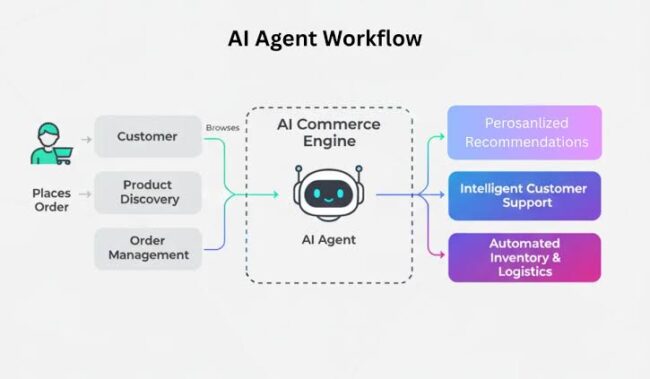
Equipped with direct API tool-calling capabilities, modern agents act as autonomous media buyers and procurement strategists. They query competing vendor platforms simultaneously, normalize non-standardized performance metrics, and programmatically route capital toward the single best-performing channel for every dollar deployed.
Multi-Vendor Orchestration in Regional Markets
When an enterprise sets a market-expansion goal across specific Florida metros, an autonomous AI agent bypasses promotional landing pages and interacts directly with primary vendor data layers:
- Real-Time API Scanning: The agent queries multiple supply-side platforms (SSPs), private regional publisher ad servers, commercial press syndicates, and targeted B2B ad networks concurrently.
- Schema & Inventory Parsing: It audits each vendor’s available inventory, verifying entity alignment, geographic penetration, local audience density, and historical conversion logs.
- Unified Field Normalization: Because vendors format metrics differently (e.g., CPM vs. Cost-per-Qualified-Lead vs. Entity Citation Value), the agent normalizes these inputs into a single, standardized analytical framework.
Rather than waiting weeks for sales representatives to deliver static pitch decks, the agent executes a multi-vendor evaluation in milliseconds, establishing clear reach, cost, and historical efficiency metrics.
Algorithmic Capital Allocation: Selecting the “Single Winner”
The core advantage of agentic marketing lies in objective, data-driven capital allocation. When presented with competing growth channels—such as splitting $25,000 across search, private B2B news syndication, or programmatic display—the agent runs predictive simulations to select the single winning channel.
The Scoring Matrix Behind the Decision
To declare a “winning” marketing solution, the agent evaluates four primary parameters:
- Incremental Conversion Lift: Predicting real pipeline growth (e.g., qualified B2B inquiries) rather than superficial impression metrics.
- Generative Citation Impact (GEO Value): Assessing whether a vendor’s media footprint enhances the brand’s visibility and citations within AI answer engines like Perplexity, ChatGPT, and Google AI Overviews.
- Data Integrity & Fraud Risk: Auditing vendor traffic logs to disqualify platforms exhibiting bot inflation or artificial audience footprints.
- Unit Economics & Margin: Calculating the net cost per acquired enterprise entity to identify the channel delivering maximum yield per dollar.
If a regional business news network demonstrates a projected 32% higher conversion density at a lower effective acquisition cost, the agent eliminates low-yield channels and allocates capital directly to the top performer.
Traditional Agency RFPs vs. Autonomous Agentic Procurement
| Operational Dimension | Legacy Agency / Manual RFPs | Agentic Multi-Vendor Procurement |
| Vendor Discovery | Limited to internal contacts, web searches, and static sales decks. | Autonomous real-time API queries across ad networks and regional press syndicates. |
| Comparative Analysis | Subjective review of non-standardized pitch materials and estimated reach. | Algorithmic normalization of CPM, CPA, and Generative Engine Optimization (GEO) value. |
| Selection Speed | 3 to 6 weeks of meetings, contract reviews, and manual sign-offs. | Real-time algorithmic evaluation and candidate ranking. |
| Budget Execution | Static quarterly commitments locked into rigid media plans. | Dynamic budget routing with continuous automated reallocation toward top performers. |
The Four-Phase Execution Pipeline for Florida Enterprises
Deploying an autonomous procurement and marketing agent framework relies on a structured multi-agent workflow:
- Discovery & Audit Agent: Scours available media inventories, publisher APIs, and ad exchanges to compile candidate vendors based on target industry constraints and regional geographic parameters.
- Simulation & Scoring Agent: Runs predictive simulations using historical performance logs to rank vendor solutions by expected ROI and cost efficiency.
- Governance & Compliance Agent: Verifies the winning vendor against corporate guardrails—enforcing spending limits, contract terms, and brand safety standards.
- Execution & Settlement Agent: Triggers automated API calls to execute media buys, launch campaigns, and log transaction metadata directly into enterprise ERP or CRM systems.
Enterprise Frameworks Driving Agentic Marketing
Florida organizations implementing multi-vendor agent workflows utilize several enterprise development and procurement frameworks:
- LangGraph & CrewAI: Developer frameworks for orchestrating multi-agent systems, enabling specialized sub-agents (e.g., audit agents, scoring agents) to collaborate on complex tasks.
- ElizaOS: An open framework for deploying persona-driven, multi-platform autonomous agents capable of interacting across social and transactional API layers.
- Coupa & Spendflo AI Workforce: Enterprise procurement layers integrating autonomous sourcing agents to manage vendor contracts, purchase orders, and multi-platform spend optimization.
Frequently Asked Questions (FAQ)
How does an AI agent compare different marketing vendor platforms in regional markets?
An AI agent connects directly to vendor APIs or ingests standardized rate cards, normalizes disparate metrics (such as CPM, CPC, and conversion rates) into unified data points, and runs predictive simulations to evaluate which platform delivers the highest return on investment.
Can an AI agent execute media buys without human intervention?
Yes, within strict governance guardrails. Organizations establish spending caps, approved vendor lists, and compliance parameters. Once configured, the agent can programmatically execute inventory purchases and issue purchase orders via connected enterprise APIs.
What is the advantage of multi-vendor AI agents over traditional ad networks?
Traditional ad networks are incentivized to route budget toward their own internal inventory. An independent multi-vendor AI agent operates objectively, analyzing global options across competing networks, private media syndicates, and direct publisher APIs to select the optimal solution for the buyer.
Sources & References
- Princeton University, Georgia Tech, & IIT Delhi Study: Aggarwal et al., GEO: Generative Engine Optimization (KDD 2024 / arXiv:2311.09735). Foundational research defining how content formatting and data density increase visibility in generative AI search engines.
- LangGraph Agent Orchestration Framework: LangChain Documentation (2026). State-graph management standards for long-running, multi-agent AI execution layers.
- CrewAI Architecture & Task Automation: CrewAI Multi-Agent Framework (2026). Technical specification for role-based autonomous agent workflows and dynamic task decomposition.
- OWASP Non-Human Identities (NHI) Top 10: OWASP Foundation (2025–2026). Security guidelines for managing autonomous agent API tokens, machine credentials, and tool-calling permissions.
- Schema.org Structured Data Vocabulary: World Wide Web Consortium (W3C) / Schema.org. Official technical standards for
JSON-LDmachine-readable schemas includingOrganization,ItemOffered, andPriceSpecification. - OpenAI Developer Platform:Function Calling and Tool Integration API Documentation. Protocol specifications for enabling LLMs to dynamically query external webhooks, databases, and vendor APIs.
- ElizaOS Autonomous Agent Environment: Open-source framework specifications for multi-agent, cross-platform autonomous workflow execution and state persistence.
- Coupa Enterprise Sourcing AI: Coupa Software Sourcing & Spend Management Framework. Architectural guidelines for AI-driven vendor evaluation, procurement automation, and contract compliance.
About the Author

About Brian French
Led by a commitment to tech-intelligent curation, Brian French tracks and analyzes the Business News in Florida including corporate developments and breaking news defining Florida's economy. Brian brings an extensive financial background to his analysis, having graduated from the University of South Florida in Finance and serving as a Vice President and Portfolio Manager for Merrill Lynch Private Investors and the Trust Department in St. Petersburg, FL, as well as a Vice President and Trust Investment Officer for SunTrust Bank in Sarasota, FL. His writing blends macroeconomic trends, fiduciary capital markets, corporate strategy, and modern digital insights for a sophisticated look at Florida's business economy.